Posts

Weather Experience

Image
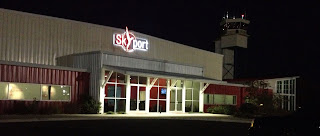
I've gained some nice experience with in-flight weather recently, starting with my trip up to Sporty's for their annual fly-in.  The weather on the way up there was pretty easy to handle, but on the way back I needed to do a bit of deviating from the planned course.   I took extra care during the preflight checks, and had some places to divert in mind if the thunderstorms ballooned up, but it ended up working out quite well, as the weather slowly dissipated during my flight. Similarly, today I did a local round trip to get some good testing in ForeFlight Mobile and the latest from Stratus (a weather data receiver).   In both cases ATC was a huge help, proactively making suggestions on good routes and checking in on folks that were near precip activity.  It's so nice to have them on the other end of the radio while you're working on a game plan. Oh, and when you use a GCO on the ground (Ground Communication Outlet) it is 4 slow clicks on the...

A little diversion

Image
I just returned from a one night trip to AR and had a minor bit of excitement on the way out there.   My plan was simple - the weather was nice and the trip distance was easily within my margin for a single/direct flight with no fuel stop (especially since I managed to get a 2-3 kt tailwind).    However, an hour or so into the flight one of the engine sensors (one that measures the turbine inlet temperature) started behaving a bit "off".  It was showing a value bouncing between 1600 degrees F up to 1750.  At times it would bounce up to 1800+ at which point the avionics system would *bong* to alert me to the problem.   I monitored the other readouts and all looked good, but I lowered the power to see if that helped.  It didn't make a difference, and the readout would instantly correct itself from time to time, yet kept bouncing around.  Feeling confident it was just a readout issue, I decided to press on and simply monitor the issues close...

Night flight

I went up for a bit tonight to try about the G1000/Perspective system in the dark for the first time. I do very little (essentially zero) night flying, but when I have done it in the past I've really enjoyed it.  There's next to no one else flying, the air is smooth, and the sights are unique - at least when you're near a city, in the country there's very little to see. I took off just as it was getting pretty dark, careful to keep the power below 102% or so.  I made it a short flight, basically looped around the city and then shot a GPS approach back into the airport.  I found the airplane to be even better for night flying than the G2 Cirrus I used to fly regularly.  That's for a few reasons: Landing lights - the lighting is a bit better, though maybe not quite as much as I would have expected, with the wing tip recognition lights.  Every bit helps though. EVS - the IR/Visible camera system was mostly helpful on the ground to s...

Ground Power Unit

Image
I recently bought a small GPU from Sporty's so I could do database updates and avionics exploration on the ground without concern over draining the batteries in the SR22. I went with this one rated for 35 Amps max.   So far I haven't seen the plane draw more than 10 amps, so 35 looks to be plenty.  It seems well built and was easy to use. Here's how I use it: Hook up wires on GPU and power it up Remove GPU cover on airplane (quarter turn screw) Plug GPU into airplane Turn on Batt 1 switch Verify that GPU indicates reasonable amperage draw (7-10 amps in this case) Turn on Avionics switch if required Then when its time to turn everything off, reverse the order.

Even more instruction

Image
   Spent an hour flying with John Collins yesterday.  He's a writer, aviation avionics/ADS-B expert, instructor, and my hangar neighbor.   We focused on making better use of vertical navigation while shooting GPS approaches, using the autopilot's VNV function.  Also spent time testing out Stratus 2 with the latest ForeFlight Mobile update.  Great way to spend a Saturday afternoon!

Training and Sun n Fun

Image
I recently started flying a newer Cirrus (with the Garmin Perspective/G1000 system) and needed to work on my transition training. I already had some time behind the TAT turbo-normalized engine in the new plane, so the main focus was learning the new avionics.  I'm lucky to live near an expert Cirrus instructor (Mark Wages of North Star Aero ) so scheduled a day to fly around with him, shoot approaches, do some basic airwork, and learn the various failure modes of the new setup. It was the perfect time to get fully IFR current and get a flight review knocked out at the same time.  It also let me feel much more at home in the airplane, as I have so much time in the Avidyne system that the Garmin one required a reset of my muscle memory ("oh yeah, the heading bug knob is over  there now"). I picked up the plane from GMU on Friday and flew it straight home.  Then Saturday morning I took off to meet Mark.  We started with a ground review of systems a...

Austin trip

Image
Most of my recent flights haven't been much to write home about.  Primarily flight testing ForeFlight stuff during local trips,  but I did take a long trip out to Austin.  That's the furthest I have flown west, and it took roughly 6 hours to get out there (with a fuel stop midway). I got to spend some time with fellow ForeFlight coders at the Redbird SkyPort.  It's a gorgeous place for airplane geeks to hang out. We got some flight testing in while we were all together.  Here's a shot of that in a lovely Mooney. Here's a shot of us coding the next version of ForeFlight Mobile in the SkyPort.  After a while, we got pretty good at not being distracted by the Ovation in the hangar. I also got to fly a couple of "real" approaches (i.e. there were lots of clouds around) which was a ton of fun.  Such a feeling of accomplishment when you punch out of the clouds and ease in for a landing in WX that few others fly in. Last week I went up for...